2026 FDA & ASEAN Compliance Guide for Private Label Feminine Care
What brands must know about US FDA (MoCRA) and ASEAN cosmetics rules for private label feminine care in 2026 — registration vs certification, key deadlines, a compliance checklist, and the documents your OEM should provide.
For B2B buyers sourcing private label feminine care: the single most common compliance mistake we see is treating “FDA approved” as the gold standard. The US FDA does not approve cosmetics. Under the Modernization of Cosmetics Regulation Act (MoCRA), the real requirement is facility registration and product listing — and knowing that difference is how you avoid paying premium prices for marketing talk instead of regulatory substance.
This guide walks through the US FDA framework as it stands in 2026, the ASEAN market basics your products will meet from Indonesia to Vietnam, a compliance checklist you can send to any supplier, and the documentation a compliant OEM should hand you before you sign.
Who this guide is for: Brand owners, procurement managers, and importers evaluating private label feminine wash, foam, gel, spray, and wipe products for US and Southeast Asian markets.
The FDA Reality Check: Registration Is Not Certification
Under MoCRA, signed into law on December 29, 2022, cosmetic products and the facilities that manufacture them became subject to federal registration and listing requirements for the first time. Two distinct obligations matter to you as a buyer:
- Facility registration — every facility manufacturing or processing cosmetics for the US market must register with the FDA and provide a US agent.
- Product listing — each cosmetic product must be listed with the FDA, referencing the registered facility where it is made.
Neither of these is a certification. The FDA does not test, approve, or certify cosmetic products before they reach the market. So when a supplier claims an “FDA certification,” that phrase does not exist in US cosmetics regulation. What a supplier can legitimately provide is an FDA facility registration number — a verifiable, audited record that the factory is registered and current.
For feminine care products — intimate washes, foams, gels, sprays, and feminine wipes — most formulations are regulated as cosmetics in the US market, which means MoCRA registration and listing apply. Products making drug-like claims (for example, treating or preventing infection) move toward the OTC drug path and a different set of rules entirely.
MoCRA Timeline at a Glance
If your brand already sells in the US or plans to, the deadlines below are the ones your contract manufacturer is responsible for tracking — and the ones you should confirm before committing:
| Obligation | Deadline | What it means for your supply chain |
|---|---|---|
| MoCRA signed into law | December 29, 2022 | Facility registration and product listing become law |
| Existing facility registration | July 1, 2024 | Factories serving the US market registered; small businesses extended to December 29, 2024 |
| Product listing — products already on market | July 1, 2024 | In-market products listed against a registered facility |
| Product listing — new products | Within 120 days of first sale | New SKUs must be listed shortly after entering US commerce |
| Facility registration renewal | Biennial | Registrations renew every two years — 2026 is the first renewal cycle for early registrants, so confirm your supplier’s registration is current |
| Product listing renewal | Annual | Listings renew each year; update within 180 days of any material change (e.g., reformulation or a new contract manufacturer) |
| Fragrance allergen labeling | December 29, 2025 | Known fragrance allergens must be declared on labels |
A Compliance Checklist for Brands
Send this checklist to any OEM before signing. Every item is something the supplier — or their US agent — should be able to document:
- FDA facility registration number — ask for it, then verify it directly against the FDA’s publicly searchable registration database.
- US agent details — foreign facilities must maintain a US agent responsible for FDA communications.
- Product listing status — your product, or a comparable product from the same line, should be listed under the facility.
- Ingredient and label compliance — ingredient dictionary, fragrance allergen labeling, and proper INCI names.
- Serious adverse event reporting — MoCRA requires reports to FDA within 15 days of a serious adverse event; confirm your partner’s process.
ASEAN Market Basics at a Glance
Across Southeast Asia, cosmetics are regulated through product notification rather than pre-market approval — but each country has its own authority, timeline, and paperwork. The differences are where most sourcing delays happen:
| Market | Authority | Model | Practical note |
|---|---|---|---|
| Indonesia | BPOM | Product notification (pre-market) | Notification required before marketing; Halal certification is an increasing part of the approval picture |
| Thailand | Thai FDA (TFDA) | Notification | No pre-market approval for cosmetics, but notification and labeling must be in order |
| Malaysia | NPRA | Cosmetic notification | Notification is mandatory; good documentation accelerates approval |
| Vietnam | Ministry of Health | Product announcement | Announcement dossier must be submitted before import and sale |
| Philippines | Philippine FDA | Certificate of Product Notification (CPN) | CPN required before products can be advertised or sold |
A compliant OEM for ASEAN is one that can hand you the documents for these notifications — not promise to “take care of everything” without showing you the submission trail.
What Documentation a Compliant OEM Should Provide
Before you sign a contract, the supplier should be able to produce, in English, each of the following:
- Facility registration proof — FDA registration number (US) or the equivalent registration documentation for your target market
- Product listing / notification records — for products already exported, or a clear statement of which market the factory is currently serving
- Independent test reports — skin and mucosal irritation studies, bacteriostatic efficacy tests, and microbial limit tests from a recognized third-party lab
- Ingredient documentation — full formulation, ingredient dictionary, and raw material certificates
- Labeling support — country-specific label requirements, from fragrance allergen declarations in the US to Bahasa and Thai labeling for ASEAN
Every document above is a standard deliverable for a well-run OEM. If a factory hesitates on any of them, that is a signal — not a negotiation point.
How Zhongkang Bainian Handles FDA & ASEAN Compliance
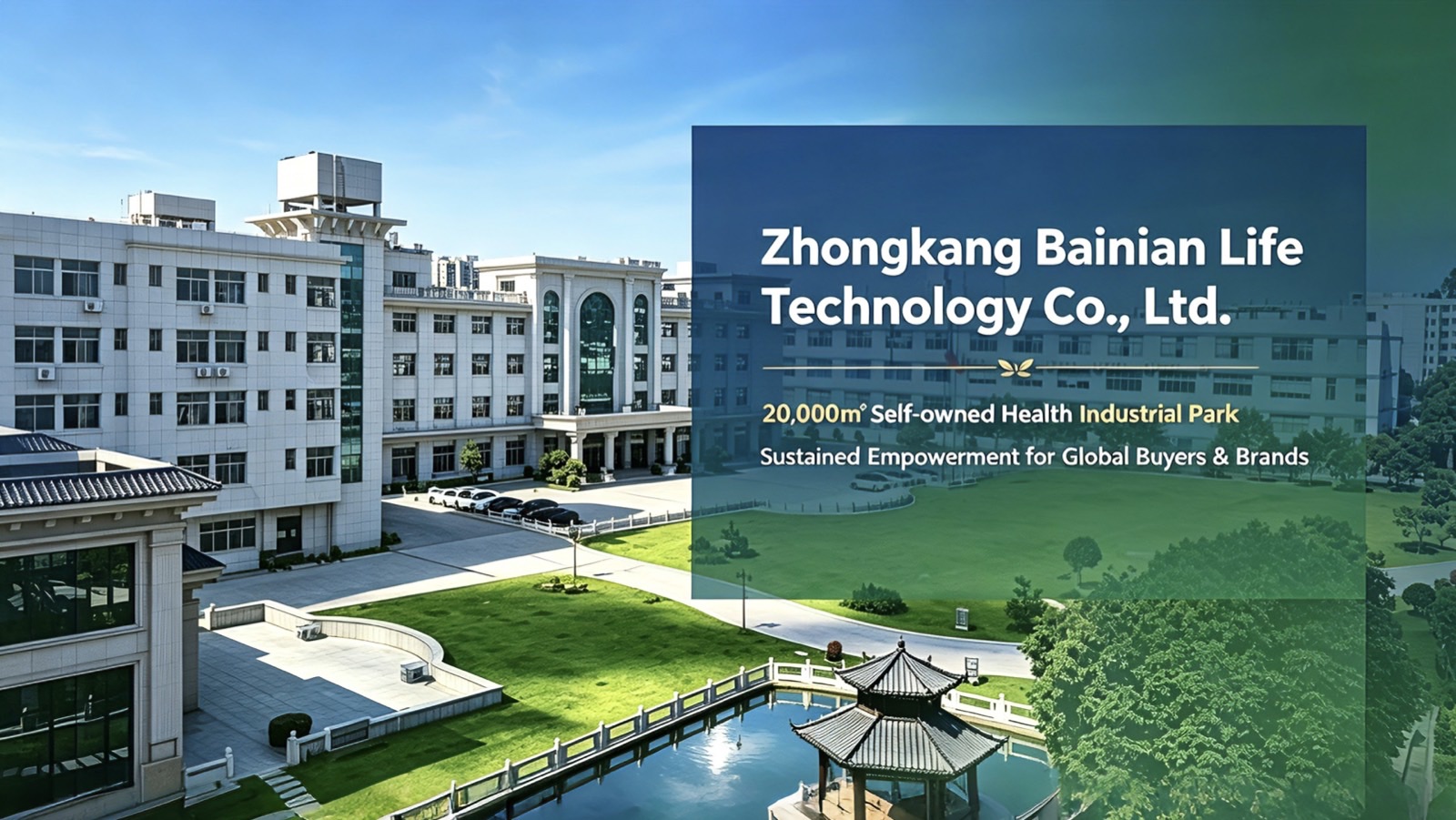
Zhongkang Bainian is a private label OEM/ODM manufacturer for feminine care in Quanzhou, China, with a 20,000 m² self-owned industrial park and a 100K-class (ISO 8) clean workshop. Compliance is built into how we work, not bolted on per order:
- US FDA facility registration — registered under the MoCRA framework, so US-bound brands receive a verifiable registration number rather than vague “FDA approved” language
- ASEAN documentation support — 5+ years of dedicated Southeast Asia business with documentation for BPOM (Indonesia), TFDA (Thailand), and Thai FDA submissions
- Disinfectant licensing and testing — China disinfectant product hygiene license (Xiaozihao), CMA-accredited mucosal & skin irritation testing, and bacteriostatic efficacy verification
- Certified quality systems — ISO 9001 / ISO 14001 / ISO 45001 certified management
- Flexible entry points — sample evaluation, liquid lines from 500 kg, and documentation-first communication
Our compliance team is the same team that builds your product — so the paperwork and the formulation never drift apart.
Summary
The regulatory picture for private label feminine care in 2026 rewards one thing above all: documentation you can verify. In the US that means an FDA facility registration number and product listings you can confirm yourself, not a supplier’s claim of approval. In ASEAN it means notification records for each target market, submitted under the right authority, in the right language.
Use the checklist in this guide as your conversation starter with any OEM. If a supplier can walk you through facility registration, product listing, test reports, and ASEAN notification documents without hesitation — and show you the records — you have found a partner who treats compliance as a capability, not a sales pitch.
If you are evaluating manufacturing partners for the US or Southeast Asia, feel free to contact us. We can walk you through the documentation for your target markets, compare what different suppliers actually hold, and support a clean, compliant launch of your private label concept.
Partner With a Manufacturer That Checks Every Box
Zhongkang Bainian is an R&D-led OEM/ODM manufacturer for private label feminine care and wellness products. US FDA facility registration, ASEAN documentation support, disinfectant licensing, and third-party efficacy testing are things we do in-house for 1,000+ brand partners across global markets.
*This guide is for informational purposes only. Regulations and deadlines reflect publicly available information at the time of writing and may change. Always verify current requirements directly with the relevant regulatory authority and your own counsel before making sourcing decisions.*